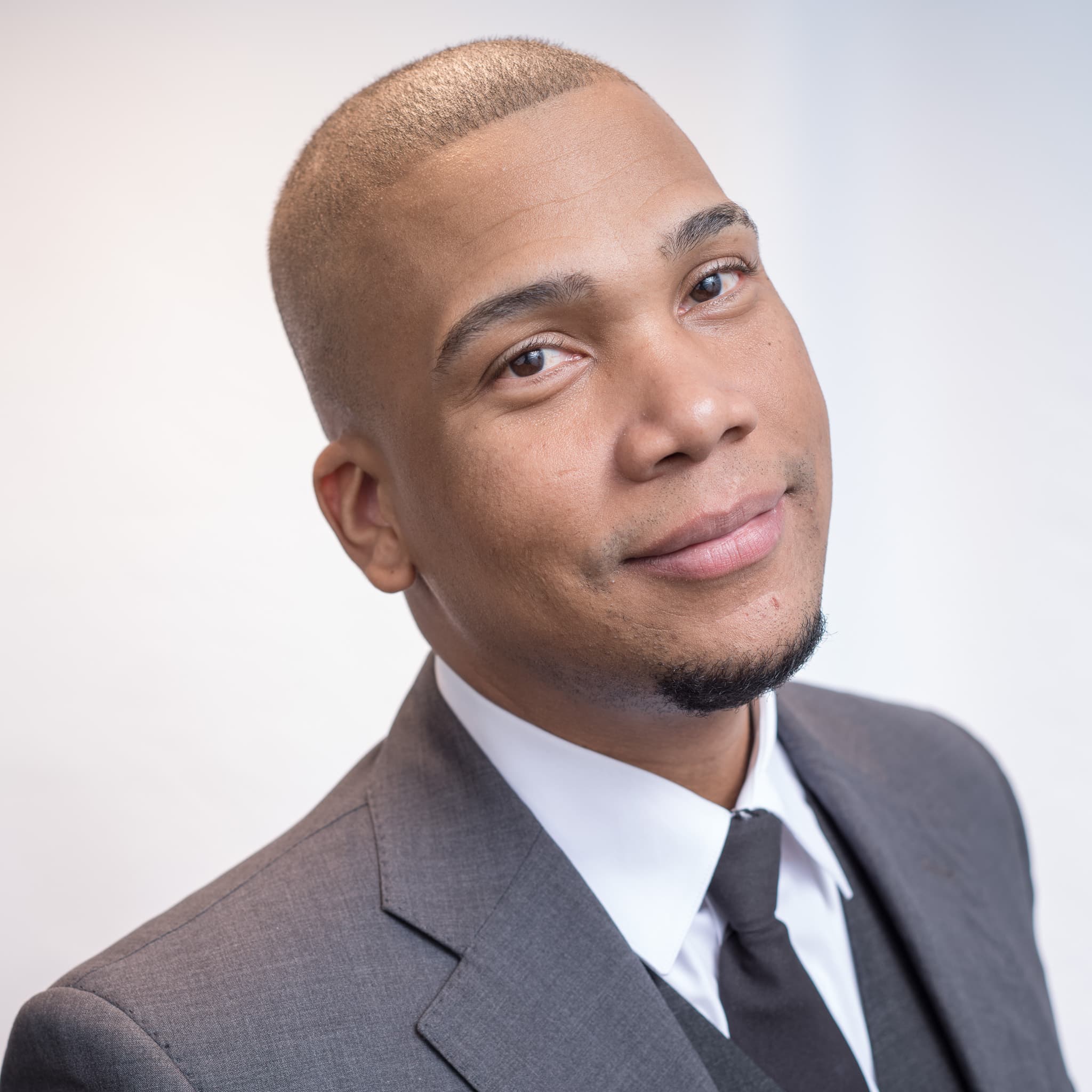
AI vs Human Headshots NYC: Why Recruiters Reject Generated Photos in 2026
# AI vs Human Headshots NYC: Why Recruiters Reject Generated Photos in 2026
The cheap-fast-good triangle finally caught up with AI headshots. In late 2024 and through 2025, the $19/month AI portrait apps quietly became the default for first-job seekers, mid-career pivoters, and anyone who didn't want to spend a Saturday in a Manhattan studio. By Q1 2026, recruiters at every tier (boutique executive search up through the in-house talent teams at finance, law, and FAANG) have shifted from neutral to actively skeptical. The detection layer is improving faster than the generation layer. LinkedIn now downranks profiles its model flags as synthetic. ATS pre-screens at three of the four top investment banks now run inbound headshots through an AI-detection classifier before the resume reaches a human.
This post is the pair-wise decision: an AI-generated headshot vs. a session with a real NYC photographer. Where the line sits in 2026. What gets you past the recruiter scan and what gets your LinkedIn profile a "synthetic media" tag. And, when a human session is the only safe option, what a New York studio session actually delivers that an AI render structurally cannot.
Book Your Session: sessions in Riverdale, The Bronx, booked as late as two days before.
Why This Comparison Actually Matters in 2026
Two years ago, the case for AI headshots was easy. Twenty-five dollars, ten minutes, eighty rendered variations. The output was indistinguishable from a real studio session at thumbnail size, which is where most LinkedIn views happened. The downside was abstract: "What if someone notices?" Nobody noticed.
That changed in three steps:
- LinkedIn's synthetic-media detector shipped Q3 2025. Profile photos flagged as likely AI-generated lose ranking in search and "People You May Know" surfaces. The flag is invisible to the profile owner. You don't get a notification. Your impressions just quietly drop.
- ATS-side detection arrived early 2026. Three of the largest applicant tracking systems (Greenhouse, Workday, Lever) added optional AI-portrait flagging as a screening filter. Recruiters at firms that turn it on see a soft warning on the candidate card. It doesn't reject the candidate, but it does change the read.
- Recruiters got pattern-trained on the tells. A senior recruiter who has interviewed 600 candidates in the last two years has now seen enough AI headshots that they recognize the visual signatures unconsciously. The hair-edge softness. The asymmetric ear hardware. The glasses with no nose pads. Even when the AI is good, it's uniformly good in a way real photography isn't, and human eyes pick that up.
The economic argument for AI hasn't changed. $25 a month for unlimited regenerations vs. $149 for one NYC session. What changed is the downside risk. In 2024 the downside was zero. In 2026 the downside is "your profile loses 30 percent of impressions and the recruiter at the firm you're targeting sees a synthetic-media warning before opening your resume." That's not a fair trade.
For anyone job-searching, pitching investors, or refreshing a public-facing brand in 2026, a headshot photographer in Riverdale, The Bronx is no longer the premium option. It's the floor.
The Pair-Wise Decision: AI vs. Human
Both options have a use case. Here's the honest fork.
Choose AI if all five are true
- You need a headshot today, before close-of-business, and a real session is logistically impossible
- The use is short-lived: a one-time conference badge, a Slack profile inside a small company, a Substack avatar at 64 pixels
- Your industry is creative or casual enough that "AI portrait" reads as on-brand, not as cutting corners
- You're comfortable refreshing the image every 90 days as detection improves and the render goes stale
- Total budget for visual identity in 2026 is genuinely under $50
Choose a human NYC photographer if any one is true
- The photo will appear on LinkedIn, a company "About" page, a bar-association directory, a fund tear sheet, a press headshot, or anywhere a recruiter or compliance team might scan
- Your industry is finance, law, healthcare, consulting, or executive search: sectors where identity verification matters
- You expect to use the photo for 12+ months across multiple platforms
- The role you're chasing pays more than $80K (the rejection-cost math changes above that threshold)
- You're a founder, partner, or principal where the personal brand is the company brand
The middle case, junior staff who only need a Slack avatar, is the only one where AI is still defensible in 2026. Every other case has tilted toward human.
Book Your Session: Manhattan and Riverdale dates open a week out.
The Five Visual Tells That Get AI Headshots Flagged
What a 2026 recruiter or detection classifier looks for, in roughly the order they spot it.
1. The Skin-Texture Smoothness Floor
AI portrait generators average toward an unnaturally even skin tone. Real skin has micro-shadows under the eye, slight redness around the nose, pores that catch light asymmetrically. Generated skin looks like skin that has been retouched by someone in a hurry, uniformly smooth, with no high-frequency texture. Even when the AI adds "skin texture," it adds it uniformly across the whole face, which is the opposite of how real photographic light works.
This is the single fastest tell. A trained recruiter clocks it in under a second.
2. The Hair-Edge Failure
Hair is the hardest thing AI portrait models render. Look at the boundary where the hair meets the background. On a real photograph, individual flyaway strands catch light against the backdrop. On AI renders, the boundary is either too sharp (the hair looks pasted on) or too soft (the strands dissolve into a halo). Earrings, hair clips, and visible hairline parts are common failure points.
3. The Eyewear Asymmetry
If you wear glasses, AI generators struggle. The bridge often sits at the wrong angle. One temple piece extends behind the ear and the other doesn't. The lenses sometimes carry a reflection that doesn't match the lighting on the face. Nose pads disappear entirely on roughly half of all generated portraits with glasses.
For lawyers and finance professionals, the two industries where eyewear is most common in headshots, this is the tell that gets flagged most often.
4. The Background Geometry Warp
Studio AI backdrops look fine in isolation. Put two AI headshots from the same generator next to each other and the seams show. The wall texture warps. A shelf line bends. A window frame doesn't quite intersect the floor at a right angle. Recruiters who view 50 candidate photos a day notice these patterns even when they couldn't articulate what's wrong.
5. The Hand and Collar Geometry
Anything below the chin is where AI renders fall apart. Collars sit at impossible angles. Lapels merge into the neck. If the prompt asked for hands ("crossed arms" portraits), you'll see six fingers, fused thumbs, or a wedding ring on the wrong hand. The fix in 2026 is to crop above the collarbone, but that's a recognizable AI-render crop in itself, and recruiters now read tight head-and-shoulders framing as a defensive crop.
Where AI Headshots Fail by Industry
The cost of getting flagged isn't the same across every job. Pair-wise breakdown.
Finance: AI is a hard no
Investment banks, hedge funds, private equity, and asset management all run extensive identity verification on hires. A flagged AI headshot on LinkedIn doesn't disqualify you, but it does change the read. Wall Street recruiters in 2026 are pattern-matching against a known fraud risk (synthetic identities used in business email compromise scams) and the threshold is set conservatively.
If you're targeting Wall Street and Financial District employers, a human session is the only defensible choice.
Law: AI fails the bar-directory standard
State bar directories require photographs that match the licensee's actual appearance. While most bars don't enforce this technologically yet, large law firms running their own associate-photo policy have started rejecting AI submissions outright. Litigation partners face an additional risk: a deposition or court appearance where the in-person attorney doesn't visually match the firm-website headshot is a credibility problem.
Healthcare: patient-facing roles can't use AI
Hospital systems, private practices, and telehealth platforms all require headshots that look like the actual provider. Patient trust depends on it. AI portraits are non-starters here regardless of detection rates.
Tech: softer, but the trend is hardening
Tech is the industry where AI headshots had the most early adoption and is now the industry where the backlash is sharpest. Series-A founders pitching VCs in 2026 report that investors specifically flag AI-looking founder photos as a "vibe check" problem, not deal-breaking, but a small negative signal in a process where every signal matters. Engineering managers at companies with strong design culture (Apple, Stripe, Linear, Figma) read AI headshots as taste failures.
If you're a tech founder or operator in NYC, a real session compounds: the photo works for the LinkedIn profile, the company "About" page, the press kit when the funding announcement hits, and the investor pitch deck.
Consulting: middle ground but trending
Big-three consultants and boutique advisory firms still tolerate AI headshots on junior profiles in 2026. The expectation flips at the manager and partner tier: anyone whose photo appears in proposal documents needs a real session.
Creative: AI is on-brand for some, not all
The one industry where an AI portrait can read as intentional rather than corner-cutting. Designers, generative artists, and AI/ML practitioners can sometimes use a stylized AI render as a deliberate aesthetic choice. The line: the render should look obviously AI (a known style), not "pretending to be a real photograph." A Midjourney-styled portrait reads as a creative choice. A photorealistic AI render reads as deception.
The Cost Math at Three Salary Tiers
The economic argument depends entirely on what the headshot is being used for. Three tiers.
Sub-$60K total comp
A $25/month AI subscription, refreshed quarterly to stay ahead of detection improvements, costs roughly $300/year. A single NYC session at the $149 entry tier costs $149 one time and stays viable for 18-24 months. Even at this tier, the human session has a lower 24-month cost ($149 vs. $600) and a higher ceiling.
$60K–$200K total comp
The decision becomes binary. A rejected job application at this tier costs $10K–$40K in opportunity cost (delayed start date, lower competing offers). A 30 percent LinkedIn impression drop translates to roughly 2-3 fewer recruiter reach-outs per quarter. The math has been one-sided since mid-2025. A real session at $149 pays for itself if it generates one additional first-round interview.
$200K+ total comp
There is no AI case. Every senior IC, manager, director, partner, principal, and C-level role above this threshold needs a human-photographed portrait that compounds across LinkedIn, the firm bio page, conference programs, press, and the next eventual move. A corporate session in Manhattan or Riverdale at the executive tier (quoted on request) is one rounding error in the annual compensation negotiation.
Book Your Session: $95 and $149 sessions, larger work quoted on request.
What a Real Fuentes Session Delivers That an AI Render Cannot
The pair-wise comparison cuts both ways. Here's where a Manhattan or Riverdale session structurally beats an AI generator, not as marketing copy, but as concrete deliverables an AI cannot produce by definition.
A photograph of you, on this date, in this wardrobe
The verifiable artifact is the single largest gap. A real session produces a photograph of you, taken on a specific date, wearing a specific outfit, in a specific room with specific lighting. That's what every identity-verifying institution (LinkedIn, bar directories, ATS systems, compliance teams) is built to recognize. AI generators produce a likeness, which is a different category of artifact.
Wardrobe and pose choice
A real session lets you wear the suit you actually wear to work. The collar sits the way your collar actually sits. Your hair is parted the way you actually part it. The pose matches the one you naturally hold. An AI generator approximates these from photographs of other people wearing similar clothes and ends up with hybrid choices that read as not-quite-yours.
Multiple looks from one session
A single Riverdale session at the standard tier produces 5-8 final selects across 2-3 wardrobe changes, plus optional outdoor frames at Van Cortlandt Park. You get a LinkedIn portrait, a press headshot, a casual brand image, and an environmental portrait, all of the same person on the same day. AI generators produce 80 variations of one render, which is the opposite distribution.
Backgrounds that match the brand
Studio sessions can match the lighting and backdrop to the brand. Law firm partners get the neutral mid-grey backdrop that bar directories prefer. Tech founders get the clean charcoal that VC pitch decks expect. Executive portraits get the institutional dark-grey that Bloomberg, Forbes, and the Wall Street Journal use. AI generators offer presets, not brand-matched backdrops.
A working file you actually own
A real session ships full-resolution files you can use across every channel, in every aspect ratio, for as long as you need them. AI subscriptions own the renders: your license terminates when you stop paying. The fine print on most AI portrait services restricts commercial use, requires attribution in some tiers, and reserves the right to revoke output.
A photographer who can re-shoot on the same lighting next year
The compounding effect of a relationship with a working NYC photographer is the part the cost-comparison spreadsheets miss. Year two, you book the same studio, same lighting, same baseline, and the photographer can match the new portrait to the existing one so a five-year LinkedIn refresh doesn't look like five different people. An AI generator's model changes every 90 days, which is why AI portraits go stale faster than real ones.
How to Tell If Your Current Headshot Will Get Flagged
A short checklist. Open your LinkedIn photo and check:
- Hair edges: are individual strands visible against the background, or is the boundary uniform?
- Skin texture: visible pores and micro-shadows, or uniform smoothness?
- Glasses (if applicable): do the nose pads exist? Are both temples visible at the right angles?
- Background: is there a recognizable physical space, or a generic studio gradient?
- The "two photos" test: show your current LinkedIn photo and one other photo of yourself to a friend who hasn't seen either, and ask "are these the same person?" If the answer is "almost, but the LinkedIn one looks weird," the photo is flagged-tier risk.
Any two yes-to-AI-tells in a profile photo puts you in the high-risk bucket for the new detection systems.
How Fuentes Studio Compares to the AI Alternative
The pair-wise version, with specifics.
| Decision factor | AI portrait subscription | Fuentes Studio NYC session |
|---|---|---|
| Time to first usable image | 10 minutes | 60-90 min session, 48-hour delivery |
| Cost (one usable image) | $25–$75/month | $149+ one-time |
| Cost (24 months) | $600–$1,800 | $149+ |
| Verifiable as you | No | Yes, dated session in Riverdale or Manhattan |
| Wardrobe options | AI approximation | Your actual wardrobe, 2-3 changes |
| LinkedIn detection risk | High and rising | Zero |
| Bar/ATS/compliance acceptance | Increasingly rejected | Always accepted |
| Use across multiple platforms | Limited license | Full-resolution files, all channels |
| Renewal path | Re-subscribe every 90 days | Re-shoot every 12-24 months |
The AI option has one advantage on this table, speed to first image. Every other dimension favors a real session. The "always accepted" line is where the comparison has tilted hardest in 2026.
Frequently Asked Questions
Q: Will LinkedIn tell me if my profile photo was flagged as AI-generated?
No. The flag is invisible to the profile owner. The only signal is reduced search ranking and lower impressions in "People You May Know", both of which take 30-60 days to notice. By the time you notice, you've already lost two months of recruiter reach.
Q: Can I take a hybrid approach, use AI for a draft and then get a real session later?
Yes, and it's actually a sensible middle path. Use an AI portrait for the first 30 days of a job search to have something on the profile, then book a real Manhattan or Riverdale session before applications go out at scale. The risk of the hybrid approach is forgetting to update, about 40 percent of people who plan to "replace the AI photo later" never do.
Q: Is a 2024 real headshot still acceptable in 2026?
A real photograph from 2024 is acceptable as long as you still look broadly like the image. The dating signals in clothing and styling get noticed at the 24-month mark. If your current profile photo is from before late 2024, schedule a refresh: Fuentes sessions start at $149 for a single LinkedIn deliverable, booked as late as two days before.
Q: What if I'm in a creative industry where AI portraits are on-brand?
Use a clearly stylized AI render, not a photorealistic one. The acceptable creative-industry use is an obvious aesthetic choice (Midjourney-styled, illustration-style, intentionally surreal). The unacceptable use is a photorealistic AI render trying to pass as a real photograph. Recruiters and clients can tell the difference and read them as completely different signals.
Q: How fast can Fuentes Studio turn a headshot around for a job search?
booking closes two days before a session, and the finished files ship 48 hours after the session. From "I need a real headshot" to "I have the file in hand" is typically under a week: book at the start of a search, not the week of the interview. The booking flow is at the booking page.
The Bottom Line
The economic argument for AI headshots evaporated when the detection layer caught up to the generation layer. Twenty-five dollars a month buys you a moving target: the AI portrait is acceptable until it isn't, and the "isn't" moment arrives quietly through reduced LinkedIn impressions, an ATS soft-flag, or a recruiter's unconscious pattern-match. A real session in Riverdale or Manhattan costs $149 once, larger sessions quoted, and stays acceptable for the working life of the photograph.
The single sentence that should drive the decision: an AI render is a likeness; a real photograph is a verifiable artifact. In 2026, every system that touches a job application (LinkedIn, ATS, bar directories, compliance teams, recruiters) is built to evaluate verifiable artifacts. The path of least resistance through every one of those systems is a real photograph from a working New York photographer.
Updating your professional image this quarter? Headshot photographer in Riverdale, The Bronx: sessions in Riverdale, The Bronx, and Manhattan, booked as late as two days before.
Explore NYC Headshot Services
Sessions from $95, booked as little as two days ahead. Retouched delivery in 48 hours.
Related Reading
Ready to Create Something Beautiful?
Whether it's a portrait session, a brand shoot, or a commercial project. Let's bring your vision to life.