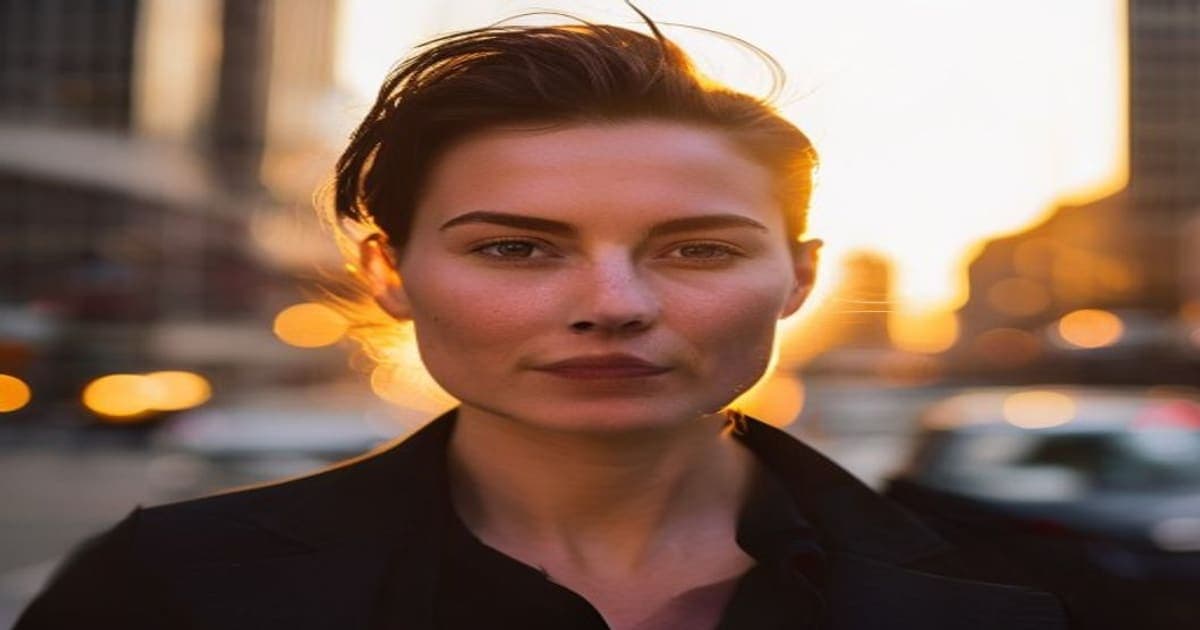
How to Pose for a Professional Headshot in NYC (2026 Guide)
# How to Pose for a Professional Headshot in NYC (2026 Guide)
Almost nobody knows how to pose for a headshot, and that's completely normal. You stand in front of the camera, your body forgets how to be a body, and you end up squaring your shoulders like a mugshot, locking your neck, and producing the tight, slightly panicked smile you've seen in every bad ID photo you've ever taken. It isn't because you're unphotogenic. It's because nobody ever taught you what to do with your shoulders, your chin, your hands, or your eyes — and a headshot is the rare situation where all four matter at once.
The good news: posing for a headshot is a small set of learnable moves, not a talent you're born with. I run a one-person studio in Riverdale, The Bronx, I've photographed more than 800 professionals, and I can tell you that the people who walk out with images they love are almost never the "naturally photogenic" ones. They're the ones who got a few clear instructions and trusted them. This guide is those instructions, written down.
*Want someone to walk you through every one of these live? [Book Your Session](/book) — sessions book a week out in Riverdale.*
One thing before we start: in a real session, you should not be doing this work alone in your head. A good photographer directs you through all of it in real time, so you can show up knowing nothing and still look great. But understanding the moves ahead of time takes the mystery out of the camera, calms the nerves, and lets you practice in a mirror the night before — which is exactly why people who read a guide like this tend to relax faster on the day.
Start with the shoulders, not the face
The single biggest amateur tell is squaring up: standing with both shoulders flat to the camera like you're about to have your booking photo taken. It makes you look wider, stiffer, and weirdly confrontational. Your body becomes a flat wall, and flat walls aren't interesting to look at.
The fix is to **turn your shoulders slightly off-axis** — angle your body about 10 to 30 degrees away from the lens, so one shoulder is a touch closer to the camera than the other. You don't twist your head away; your face still comes back toward the lens. This single move does three things at once: it narrows your silhouette, it adds a sense of dimension and line to the photo, and it instantly reads as more relaxed and confident. Think of how people stand when they're comfortable at a party versus how they stand when a cop pulls them over. You want the party version.
Which shoulder forward? It barely matters, but most people have a "better side," and a small turn lets you favor it. In a real session I'll have you try both and we keep whichever frames you best. The key insight is that the photo's whole mood is set by your shoulders before your face does anything at all.
The chin move nobody figures out alone
Here is the most counterintuitive instruction in all of headshot posing, and the one that produces the loudest "wait, *that's* the difference?" reaction in my studio: **push your forehead slightly toward the camera and bring your chin down and forward a touch.**
It feels wrong. It feels like you're craning your neck like a turtle. On camera, it looks like nothing of the sort — it sharpens your jawline, eliminates the soft under-chin that a straight-on or slightly-up angle exaggerates, and makes your eyes look more engaged. The reason it feels weird is that it's the opposite of what we do under stress, which is to pull the chin back and up. Pulling back is what flattens your jaw and gives you the "double chin" that has nothing to do with your weight and everything to do with the angle.
You cannot eyeball this on your own, which is exactly why it's the move people never discover. The amount is small — overdo it and you look like you're inspecting the floor; underdo it and nothing changes. The sweet spot is a few centimeters of "forehead toward me, chin down and out," and a photographer watching your face will dial it in frame by frame. If you remember one thing from this entire guide, remember that the jaw is fixed with the chin, and the chin goes *forward and down*, not up.
What to do with your hands
For a tight headshot — head and shoulders only — your hands usually aren't in frame, so you'd think they don't matter. They do, because what your hands are doing changes your whole posture. Clenched fists travel straight up into tight shoulders and a tense jaw. Let your hands hang heavy and loose and your shoulders drop, your neck lengthens, and your face softens. So even when nobody will see them, **let your hands go slack and heavy** — it's a posture reset that shows up in your face.
For a wider three-quarter or environmental portrait where the hands *are* visible, give them a job:
1. **Cross the arms — lightly.** Not the defensive, squeezed-tight version. A loose, relaxed fold reads as grounded and self-assured, especially for executives and founders. 2. **One hand in a pocket, thumb out.** Casual, confident, and it gives the arm a natural line instead of a dead hang. A go-to for tech and creative professionals. 3. **Hand to the lapel, collar, or glasses.** A small, purposeful touch adds energy and stops the hands from looking abandoned. 4. **Hands clasped loosely in front (for seated shots).** Keeps the frame tidy and the shoulders down.
The rule for hands is simple: they should look like they're *doing* something on purpose, never like they got stuck mid-gesture. When in doubt, less movement and more weight.
The eyes are the whole photo
You can nail every structural move above and still get a dead photo if the eyes aren't alive. A headshot lives or dies on the eyes — it's the first thing a recruiter, client, or LinkedIn visitor locks onto, and it's where "this person looks confident and approachable" actually gets decided.
Two things make eyes work. First, **squint very slightly** — engage the lower eyelids, the way you naturally do when you're genuinely amused or interested. Photographers call it the "squinch." Wide, fully-open eyes read as startled or nervous; a slight lower-lid engagement reads as confident and warm. It's the difference between deer-in-headlights and someone who's comfortable in their own skin.
Second, **think a real thought.** A blank stare comes from a blank mind. When I want a warm, approachable expression, I'll have you picture someone you actually like walking into the room. When I want authoritative, I'll have you think about something you're genuinely good at. The camera reads the thought behind the eyes far more than any muscle you try to pose. This is why "say cheese" produces such terrible results — it engages the mouth and leaves the eyes empty.
Fixing the smile
The forced, hold-it-too-long smile is a universal problem, and the cause is timing. A genuine smile lasts about a second and then fades; if you fire it up and hold it while the photographer fiddles, it curdles into a grimace with tight eyes. The fix is **rhythm**: relax your face completely, then bring the expression up fresh right as the shutter fires, then let it drop and reset. A good photographer paces the shoot to your expression, not the other way around, catching the half-second where you look like yourself on a good day.
If full-teeth smiling feels unnatural to you, don't force it. A closed-mouth "almost-smile" with engaged eyes is often the most powerful, professional look — common among finance, legal, and executive clients. The trick is the eyes: a soft smile with dead eyes looks cold, but a soft smile with a little squinch and a real thought behind it reads as quietly confident. There's no single "correct" expression; there's the one that matches how you want to be received.
Sitting versus standing
If you're seated, the same rules apply with two additions. **Sit forward on the chair**, not back into it — leaning slightly toward the camera projects engagement, while sinking back reads as disengaged or slumped. And keep your spine long; the moment you relax into a chair, your posture collapses and the chin-forward move stops working. Standing tends to be easier for most people because there's less to collapse, but seated portraits can feel more intimate and are great for warmer, brand-style images.
Whether sitting or standing, the through-line is the same: **lengthen, then angle, then engage.** Spine tall, shoulders turned, chin forward-and-down, eyes alive. In that order.
A few specifics: glasses, posture habits, and nerves
**Glasses.** If you wear them every day, wear them — your headshot should look like you. The posing concern is reflections and frames sitting low on the nose; a small chin adjustment and a tilt of the frames usually clears glare, which is a thing the photographer manages on the day. Don't switch to contacts just for the shoot if you never wear them; the photo should match the person who shows up to the meeting.
**Posture habits.** If you spend your days hunched over a laptop — and in this city, who doesn't — your default standing posture has probably crept forward and rounded. Before the shoot, roll your shoulders back and *down* (not up toward your ears), and imagine a string lifting the crown of your head. Reset this every few frames, because it slips.
**Nerves.** Almost everyone is a little stiff for the first few minutes, and that's expected — it's why a session isn't one click. The fix is breathing: a slow exhale right before the shutter drops your shoulders and softens your face more than any pose. Photographers build in this warm-up; the photos that make the final cut are almost never from the first two minutes.
A real session, start to finish
Here's how the posing actually unfolds when you're standing in front of me in Riverdale, so the abstract moves become concrete:
You walk in, we talk for a few minutes — not about posing, just to get you out of your head. I set your feet and turn your shoulders off-axis. I check the light on your face and have you bring your forehead toward me, chin down a hair. I tell you to let your hands hang dead and roll your shoulders down. Then we work the expression: I'll crack a joke or ask about something you actually care about, watch for the squinch and the real smile, and fire when your eyes come alive. Between frames I'll nudge — "chin a touch more, now drop the shoulders, good, think about that again" — and within ten minutes the stiffness is gone and we're just collecting the good ones. You're not performing; you're being directed. That's the entire difference between a headshot that looks like you on your best day and one that looks like a hostage photo.
That's also why posing instructions matter less than people fear. You don't have to memorize this guide. You have to show up, and let someone whose job is watching faces do the dialing-in. Every session is delivered within 48 hours, fully edited and retouched, and it's the consistency of this direction — frame after frame, client after client — that holds the studio's 5.0 Google rating.
Practice this before your shoot
If you want to walk in already ahead, spend five minutes at a mirror the night before:
1. Turn your shoulders 15–20 degrees off-square and notice how your silhouette narrows. 2. Bring your forehead forward and your chin down-and-out; find the point where your jaw sharpens without looking like a turtle. 3. Practice the slight lower-eyelid squint until you can do it without scrunching your whole face. 4. Practice bringing a real smile *up* from neutral and letting it drop, instead of holding one. 5. Take a slow exhale and feel your shoulders drop — that's your reset button on the day.
That's it. Five moves. You'll forget half of them under the lights, and that's fine — your photographer carries the rest.
FAQ
**What do I do with my hands in a headshot?** For a tight head-and-shoulders headshot your hands usually aren't in frame, but you should still let them hang heavy and loose, because clenched hands tighten your shoulders and face. For wider portraits, give your hands a purpose: a light arm-cross, one hand in a pocket with the thumb out, or a relaxed touch to a lapel or glasses. The goal is hands that look intentional, never stuck mid-gesture.
**How do I avoid looking stiff or fake?** Stiffness comes from three things: squared shoulders, a locked neck, and a held smile. Turn your shoulders slightly off the camera, bring your chin forward and down to sharpen the jaw, and bring your expression up fresh as the shutter fires rather than holding it. A slow exhale right before each frame drops your shoulders and softens everything. In a real session, the photographer paces all of this for you.
**Should I smile with teeth or not?** Whatever matches how you want to be received — there's no universal rule. A full smile reads warm and approachable; a closed-mouth "almost-smile" with engaged eyes reads as quietly confident and is popular with finance, legal, and executive clients. The deciding factor isn't the mouth, it's the eyes: a soft smile only works if there's a real thought and a slight squint behind it.
**Why does my chin look wrong in photos?** Almost always because the chin is pulled back and up, which flattens the jaw and exaggerates the under-chin — it's an angle problem, not a weight problem. The fix is counterintuitive: push your forehead toward the camera and bring your chin down and forward a small amount. It feels like craning your neck but on camera it sharpens the jawline. It's the single hardest move to self-direct, which is why a photographer guides it frame by frame.
**Do I really need to know how to pose before my session?** No. Reading a guide like this calms nerves and helps you practice, but in a real session you should arrive knowing nothing and still walk out with images you love — directing your pose, expression, and timing is the photographer's job. The professionals who get the best results aren't the naturally photogenic ones; they're the ones who relaxed and trusted clear direction.
The bottom line
Good headshot posing is just four small moves stacked together: angle the shoulders, push the chin forward and down, let the hands go heavy, and bring the eyes alive with a real thought and a slight squint. None of it is talent and all of it is learnable — and in a real session, you don't even have to carry it, because directing it is what you're paying a photographer to do.
If you want a professional image that looks like you on your best day, the [LinkedIn headshot](/linkedin-headshots) and [executive portrait](/executive-portraits) formats are both built around exactly this kind of frame-by-frame direction. And if a past photographer coached you through it and it showed, [leaving a quick review](/leave-a-review) helps the next nervous person find someone who actually directs instead of just pointing a camera.
*Looking to update your professional image? [professional headshot photographer NYC](/) — sessions in Riverdale, NYC, booked at least a week ahead.*
*Ready when you are — [Book Your Session](/book) and let's make the camera the easy part.*
Explore NYC Headshot Services
Sessions from $65, booked at least a week ahead. Retouched delivery in 48 hours.
Related Reading
Ready to Create Something Beautiful?
Whether it's a portrait session, a brand shoot, or a commercial project — let's bring your vision to life.