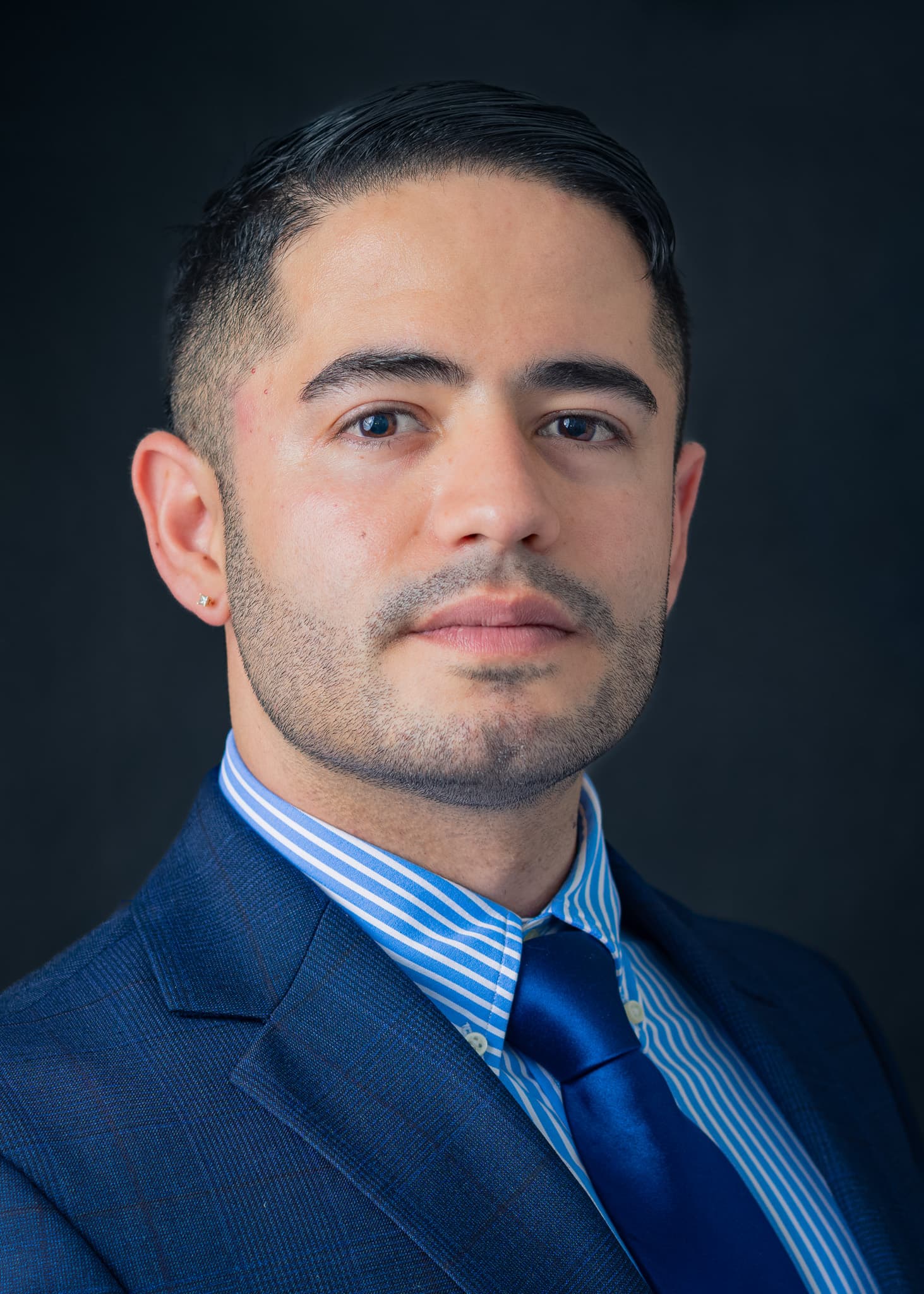
Team Headshot Photographer NYC: In-Studio vs On-Location vs Hybrid in 2026
# Team Headshot Photographer NYC: In-Studio vs On-Location vs Hybrid in 2026
If you are the person at your NYC firm assigned to "get the team photographed," you have probably opened three browser tabs and realized the decision is not really about who the photographer is. It is about where the session happens. In-studio, on-location, or a hybrid of both: each path has a different price per head, a different calendar cost, and a different visual outcome on the final website grid.
I run team headshots for NYC firms out of my Riverdale studio in The Bronx, plus on-location coverage across Manhattan and the outer boroughs. The booking question I get most often is not "what does it cost" but "which format is right for our team." This guide walks the three options against the criteria that actually matter, and tells you which one I would recommend for your specific situation.
Book Your Session → Team dates for groups of five to forty: book at least a week out.
The Three Formats, Defined
Before the comparison, here is what each option actually means in 2026 for a NYC team session.
In-Studio (everyone comes to Riverdale)
Your team travels to my private studio in Riverdale, The Bronx, a direct outbound ride from Midtown on the 1 train, free parking, no shared waiting room. We block a morning or afternoon, run subjects through in 20-minute increments, and you leave with every team member shot in identical light, identical background, and identical retouching standards. The Riverdale studio is built for this: controlled strobe lighting, a paper backdrop in either neutral gray or warm ivory, and a wardrobe lounge where the next subject preps while the current one shoots.
On-Location (I come to your office)
I bring the studio to you. A full mobile kit (strobes, modifiers, backdrop stand, neutral or office-branded background, tethered monitor) sets up in a conference room, a vacant office, or a corner of the lobby. The session runs in the same 20-minute increments, but the calendar cost flips: instead of every team member spending 90 minutes round-trip on transit, they spend 20 minutes at their desk-adjacent shoot slot and walk back to their next meeting.
Hybrid (some on-location, some in-studio)
For teams larger than fifteen people, or teams split across multiple NYC offices, the hybrid model usually wins. Senior leadership and any high-profile partners get photographed on-location in their own building: their backdrop matches the firm's visual identity, the calendar block is short, and the optics of "the partner came to us" disappears. Everyone else gets a Riverdale studio slot on a flexible date, often spread across two or three mornings. The output gets color-matched in post so the website grid looks like a single coherent session.
Cost: Per-Head and Total
The honest math for a NYC team session in 2026 breaks down differently than a single-subject headshot, so I will walk it carefully.
In-Studio Per-Head Economics
The studio overhead is a single flat block: no transit time, no equipment transport, no on-site setup. That means the per-head rate at the studio is the lowest of the three formats, especially once you get past eight or ten subjects. A mid-size team (10–15 people) in-studio typically lands at the bottom of the team-rate range. The catch: you are asking each team member to spend half a workday on transit and a Riverdale session, which is a soft cost the firm does not see on an invoice but absolutely shows up in lost billable hours.
On-Location Per-Head Economics
On-location carries a setup-and-strike fee that covers the mobile kit, the senior assistant for kit management, and the travel block. That fee is fixed regardless of team size, which means it amortizes well for larger teams and poorly for very small ones. For a team of four, on-location is the most expensive per head. For a team of twenty in a single Midtown office, on-location is often the cheapest total-cost option once you factor lost billable hours from transit.
Hybrid Economics
Hybrid splits the cost structure: the on-location fee covers only the leadership block (4–8 subjects), and the studio block carries the rest at the standard team-rate. For most teams of 15–40, this comes out close to a pure on-location rate per head but with two large advantages: the studio block can be scheduled across multiple low-meeting days, and the senior leadership block is short enough to fit a single morning.
For exact pricing by team size and format, the team headshots page lists the current 2026 rate structure.
Calendar Control: Whose Day Gets Burned
This is the criterion most NYC firms underweight, and the one that usually flips the decision once it gets named.
In-studio means every team member loses 90–120 minutes round trip, plus 20 minutes of session time. For a team of 20, that is roughly 40 lost work-hours across the firm. For a billable-hour business (law firm, consulting practice, agency), that single calendar cost often exceeds the entire photography invoice.
On-location flips it. The session runs adjacent to the team's actual desks. Each member loses 20 minutes, total. For the same team of 20, that is under 7 lost work-hours across the firm. The trade-off: a single calendar day where the conference room is unavailable, and a 90-minute setup/strike window before and after.
Hybrid optimizes both axes. Leadership avoids any disruption to their week. I come to them. Everyone else gets to pick from multiple studio dates spread over a week, so transit-day overhead gets matched to whoever has the lightest calendar that morning.
Look Consistency: How the Final Grid Reads
A team headshot grid lives or dies on visual consistency. When users land on your firm's "Our Team" page, the eye reads the grid as a single image first and individual portraits second. Inconsistencies (different background colors, different head sizes, different skin tones, different lighting angles) register as unprofessional before the user can even articulate why.
In-Studio Consistency
In-studio wins consistency by default. Every subject is photographed in the same room, with the same strobe positions, against the same backdrop, on the same day or set of days. Color matching in post is minimal: the files already match. This is the format I recommend for any firm where the team page is a meaningful conversion surface (recruiting, business development, investor relations).
On-Location Consistency
On-location can match in-studio consistency, but it requires discipline. The mobile kit produces the same light quality as the studio, and the backdrop is identical. The variables are room geometry (low ceilings change strobe placement), ambient light (afternoon sun through a window changes the color temperature), and pacing (a rushed on-site session produces uneven outputs). I shoot tethered to a calibrated monitor on every on-location job specifically to catch these variables before they accumulate.
Hybrid Consistency
Hybrid requires the most post-production work to look consistent. The on-location leadership files and the studio files start with different backgrounds and slightly different ambient color casts. Color matching during retouch standardizes the skin tones and backgrounds, but it is real labor, which is why hybrid pricing includes an extended retouch block, and why I will sometimes recommend a pure in-studio session for firms where the website grid is the top-priority deliverable.
Which Format I Recommend, by Firm Type
After running team sessions for NYC law firms, hedge funds, agencies, tech companies, and family offices, the recommendation pattern has gotten predictable.
- Boutique law firm, 4–10 attorneys, single Manhattan office: in-studio at Riverdale. The transit cost is real but manageable, the per-head price is the lowest of the three, and the bar-directory and LinkedIn output benefits from studio-grade consistency. See headshots for lawyers for the specific deliverables most firms request.
- BigLaw practice group, 15–40 attorneys, Midtown or Financial District office: hybrid. Equity partners and group chair get on-location; senior associates, counsel, and partners on the road get studio dates across two mornings. Calendar control becomes the dominant factor at this size.
- Hedge fund or investment firm, 5–20 professionals, single Midtown office: on-location. Calendar control is paramount, the team is small enough that the setup fee amortizes cleanly, and the office often has a room with the architectural quality to use as background context. See the executive portraits framework for the look most funds want.
- Tech company or agency, 20+ across two offices: hybrid. The two-office split makes pure on-location expensive, and the team is large enough that the studio block carries the per-head average down significantly.
- Solo or two-person practice adding their first hire: in-studio. Honestly, this is the easiest call: the studio rate scales smoothly from one to three subjects, the per-head economics are best, and the consistency is automatic. See personal branding photography if the session is wider than headshots only.
Turnaround: 48-Hour Delivery Across All Three Formats
Delivery time does not change by format. All three options ship final retouched files within 48 hours of the session: same for a single subject, a 10-person studio block, or a 40-person hybrid. The 48-hour clock starts when the last subject leaves the camera, which means for a multi-day hybrid the first set of files is ready 48 hours after the first session, not after the last.
The only delivery exception is when a firm requests an extended retouch level, typically for executive portraits at the senior partner or C-suite tier. Those files run a separate 72-hour cycle because the retouch is hand-finished rather than batch-processed. Everything else holds the 48-hour standard.
How to Decide in 5 Minutes
If you want a short decision tree, here it is.
- Team of fewer than 10, single office, calendar flexibility exists → in-studio.
- Team of 10–20, single office, calendars are tight → on-location.
- Team of more than 20, or multiple offices, or leadership wants the on-site treatment → hybrid.
- Website team grid is the top-priority deliverable, regardless of size → lean in-studio for consistency.
- Calendar protection is the top-priority constraint, regardless of size → lean on-location for the transit savings.
For a quick answer on which format fits your specific team, the book page collects headcount, office location, and target shoot date in a single form and I will reply within a business day with the format recommendation and quote.
Frequently Asked Questions
How many people can you photograph in a single day?
Up to 24 subjects in a single eight-hour studio block at 20-minute increments, including buffer between subjects. On-location is closer to 16–18 per day because the setup, strike, and any room transitions cost time. Above those counts, the session runs across two days.
Do you photograph teams outside Manhattan?
Yes. The studio is in Riverdale, The Bronx, which serves Manhattan, the Bronx, Westchester, and northern Brooklyn well. I cover on-location across all five boroughs and into Westchester and northern New Jersey for an added travel block. For sessions further out, the in-studio option becomes the default since transit costs flip the calendar math.
Can the team grid mix in-studio and on-location shots and still look consistent?
Yes, with one caveat: the backgrounds need to be the same color family or visually neutral, and the retouch block needs the extra hybrid time built into the quote. When those two conditions hold, the final grid reads as a single session. When they do not, the grid reads as two sessions stitched together, which defeats the point.
How far in advance should we book a team session?
For sessions of 10 or fewer, two to three weeks is usually enough: bookings open seven days out, and the first bookable week typically has openings. For sessions of 20 or more, four to six weeks gives both sides enough runway to coordinate calendars across the team. Hybrid bookings benefit from the longer runway because the on-location block has to align with leadership availability specifically.
What happens if a team member has to reschedule?
Single rescheduled subjects from a studio block can usually be added to a different studio day at the team rate. Rescheduled subjects from an on-location block are typically rebooked into the studio rather than a second on-site visit: the on-location fee does not duplicate well for a single missed person. I cover the logistics in the booking confirmation email so there are no surprises.
---
Looking to update your professional image? book a headshot session in NYC: sessions in Riverdale, NYC, booked as little as two days ahead.
Explore NYC Headshot Services
Sessions from $95, booked as little as two days ahead. Retouched delivery in 48 hours.
Related Reading
Ready to Create Something Beautiful?
Whether it's a portrait session, a brand shoot, or a commercial project. Let's bring your vision to life.