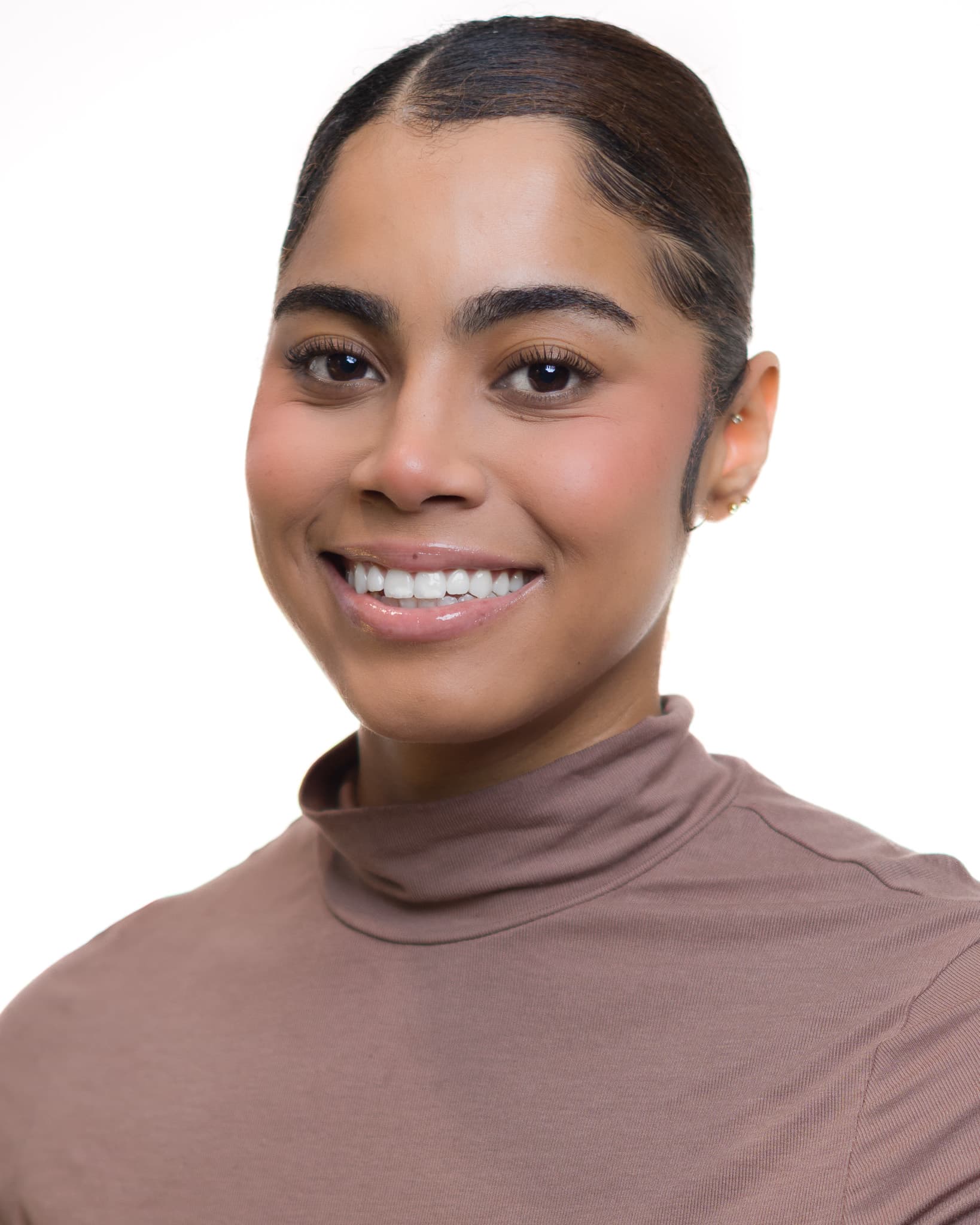
Why Your Expression Makes or Breaks a Headshot (and How We Get a Real One): NYC 2026
# Why Your Expression Makes or Breaks a Headshot (and How We Get a Real One): NYC 2026
People spend a week deciding what to wear to a headshot session and about four seconds thinking about their face. That ratio is backwards. The shirt matters, the lighting matters, the crop matters, but none of them are the first thing a stranger reacts to when your photo loads on a screen. The first thing they react to is your expression. It happens before they read your name, before they register your title, before they notice whether you wore a blazer. The face lands first, and everything else is read through it.
I run a one-person studio in Riverdale, The Bronx. The single biggest difference between a headshot that works and one that quietly underperforms is almost never the wardrobe or the camera. It's whether the expression reads as a real person you'd want to talk to, or a slightly tense one waiting for the shutter to click. The good news: a genuine expression is not a gift some people are born with. It's something a photographer's job is to draw out, and once you understand how it works, your own session gets dramatically easier.
Want a headshot where you actually look like yourself? Book Your Session: sessions book as little as two days out in Riverdale.
What People Actually See First
There's a well-worn finding in psychology research that people form a trust-and-competence judgment about a face in roughly a tenth of a second, and that the snap judgment barely changes when given more time. You don't need to take that number to three decimal places to feel its truth. Think about how you scan a LinkedIn search results page, a panel of speaker bios, or a law firm's "Our Team" grid. You are not studying anyone. You are flicking past faces and getting a gut read on each one (approachable, stiff, warm, guarded) and that gut read is doing the deciding.
Here's the part that surprises people: the wardrobe barely participates in that first read. A navy blazer and a charcoal sweater send almost the same signal in the tenth of a second it takes to form an impression. What does participate is the eyes and the mouth, whether the eyes look engaged or checked-out, whether the mouth is a real expression or a held one. That's where the human read happens. The clothes get noticed a beat later, once someone has already decided how they feel about the face.
So when a headshot underperforms, the culprit is usually not the thing the person worried about. It's the expression they didn't think about at all.
Why Most People Freeze on Camera (It's Not You)
Almost everyone tenses up the moment a lens points at them. This is not a personal failing and it is not vanity. A camera is a small social threat. You're being evaluated, you can't see how you look, and your face is trying to perform "natural" on command, which is the one instruction a face cannot follow. The result is the expression I see at the start of nearly every session: a slightly raised, held smile that doesn't reach the eyes, shoulders creeping toward the ears, and a person quietly waiting for it to be over.
Two specific things go wrong:
The first is the frozen smile. A genuine smile engages the muscles around the eyes: the cheeks lift, the eyes narrow slightly, small creases appear. A posed smile uses only the mouth, leaving the eyes wide and uninvolved. Viewers can't articulate the difference, but they feel it instantly. A mouth-only smile reads as polite-but-guarded. The eye-engaged version reads as warm. The technical name for the eye involvement is the orbicularis oculi muscle; the practical name is "a real one."
The second is the wait. When someone is bracing for the shutter, their face holds a low-grade tension the whole time. Even a flattering angle and perfect light can't rescue a face that's clenched. The expression has to soften, and softening can't be forced: it has to be coaxed.
Neither of these is the subject's fault. They are the default human response to a camera, and getting past them is the photographer's job, not the client's.
Expression Beats Wardrobe: A Quick Test
If you're not convinced expression outranks clothing, run this experiment in your head. Picture two headshots of the same person. In the first, they're in a sharp, well-fitted blazer, but their smile is tight and their eyes are slightly absent. In the second, they're in a plain crew-neck sweater, but they look genuinely warm: eyes engaged, shoulders relaxed, the hint of a real laugh just settling. Which one would you rather get on a sales call? Which one would you trust with your retirement account, or hire to argue your case?
It's not close. The sweater wins every time, because the sweater photo has a person in it and the blazer photo has a costume. That's the whole argument for why we spend most of a session on expression and only a few minutes on adjusting a collar.
This is also why I tell clients not to over-stress the outfit. A clean, well-fitting top in a color that suits you is plenty: the best colors for a headshot are the ones that don't fight your skin tone. Beyond that, the wardrobe's job is just to not get in the way. The face does the selling.
How We Actually Draw Out a Real Expression
This is the part of the craft that's invisible in the final image, which is exactly why it's worth explaining. Getting a genuine expression is a process, and it's a repeatable one. Here's how a session actually unfolds on my end.
- Talk first, shoot second. The first few minutes are conversation, not photography. Where you work, what the photo is for, what you secretly hate about being photographed. This isn't small talk for its own sake. It's how the face stops bracing. People relax when they're being listened to, and a relaxed face is the entire goal.
- Give the body something to do. Tension lives in the shoulders and jaw. A small physical reset (roll the shoulders back and down, exhale, drop the chin a hair) releases it faster than any verbal "relax," which never works because nobody has ever relaxed on command.
- Direct the eyes, not just the mouth. "Smile" produces the mouth-only version. Instead I'll prompt a specific thought or a real reaction, because the eyes follow genuine attention. When the eyes engage, the smile becomes real automatically: you can't fake your way down from the eyes, but a real eye engagement pulls the whole face into honesty.
- Catch the moment after the laugh. The best expression is often not the laugh itself but the half-second as it settles: warm, open, unguarded, not goofy. I shoot continuously through that window because it can't be posed, only caught.
- Show you the back of the camera. Once you see one frame where you look like yourself, the bracing disappears for good. Proof beats reassurance. The second half of a session is almost always better than the first for exactly this reason.
A recent session makes the point. A finance manager came in convinced she "wasn't photogenic": her words, said before she'd even sat down. The first ten frames proved her right, in the sense that she looked exactly as braced as she felt: chin tucked, smile held, eyes doing nothing. So we stopped shooting and just talked about a project she was proud of. Somewhere in describing it she forgot the camera was there, her shoulders dropped on their own, and the expression that arrived was warm and certain: the look of someone who's good at her job and knows it. That frame is the one on her firm's leadership page now. Nothing about her changed between the bad frames and the good one except that she stopped performing and started being present. That's the whole craft in one session.
None of this requires you to be photogenic, extroverted, or comfortable on camera. It requires a photographer who treats the expression as the actual work of the session rather than an afterthought once the lighting is dialed in. That's the difference between a professional headshot session and a quick snap against a backdrop.
What You Can Do Before the Session
You're not just a passive subject here: a few things on your end make the expression come more easily.
Come rested, not rushed. A face that sprinted from a meeting holds that stress for the first ten minutes. Build in a buffer. Arriving calm shaves real time off the warm-up.
Eat something. Low blood sugar reads on a face as flatness. It's a small thing that makes a visible difference.
Don't over-rehearse a smile in the mirror. Practicing a "headshot face" almost always produces the held, mouth-only version. Trust that the session is designed to find your real one. Your job is to show up and let the process work.
Bring a reference if you have one, and one you dislike. Knowing what you want to avoid is often more useful than knowing what you want. If past photos always made you look severe, say so up front. That's directable.
Think about who the photo is for. An executive portrait for a board page wants quiet authority; a LinkedIn photo for a sales role wants warmth and approachability. The expression we aim for shifts with the audience, and naming the audience helps us land the right one.
Why This Matters More in 2026
The bar for a "real" expression has quietly gone up. AI-generated and heavily filtered headshots have flooded LinkedIn, and they share a tell: the expression is technically smiling but subtly hollow, eyes that don't quite engage, a smoothness that reads as not-quite-human. People have started to notice, even subconsciously, and the reaction is a small loss of trust.
That's an opening for anyone willing to put a genuinely human photo forward. A real expression (caught in a real moment, by a photographer who took the time to get you there) is now a differentiator, not just a nicety. It signals that there's an actual person behind the profile, which is the entire thing a headshot is supposed to communicate. Authenticity has gone from a soft virtue to a competitive edge.
Every session at the studio is built around that idea, with finished images delivered in 48 hours and a process that's earned a 5.0 Google rating from the professionals who've sat in front of the camera. The wardrobe will photograph fine. What we're really there to capture is you, on a good day, looking like someone worth knowing.
Frequently Asked Questions
Does my expression really matter more than what I wear? For the first impression, yes. People react to your eyes and mouth before they register your clothing: that read happens in a fraction of a second. A great outfit can't rescue a tense expression, but a genuine expression carries a simple, clean outfit easily. Wear something well-fitting that suits you, then let the face do the work.
I always look stiff in photos. Can that be fixed? Almost always. Looking stiff isn't a fixed trait. It's the default response to a camera, and it's the specific thing a good session is designed to undo. Through conversation, small physical resets, and catching the moment right after a real reaction, the tension softens. Most people are surprised by the second half of their session.
How do I get a natural smile instead of a frozen one? You don't force it from the mouth: you let it come from the eyes. A real smile engages the muscles around the eyes, and that only happens with a genuine reaction or thought. That's why I prompt specific reactions rather than just saying "smile." The mouth follows the eyes, not the other way around.
Should I practice my expression in the mirror beforehand? It's better not to. Rehearsing a "headshot face" tends to produce the held, mouth-only smile that reads as guarded. Come rested, come fed, and trust that the session is structured to find your real expression. Over-preparation usually works against you here.
Do you photograph people who hate being in front of a camera? Constantly, it's most people, honestly. Camera-shyness is the norm, not the exception, and the whole approach is built for it. You don't need to be comfortable on camera walking in. That's the photographer's job to handle, not yours.
Book a Session Where You Look Like Yourself
A headshot is one of the few photos of you that strangers will use to decide something real: to call you back, to trust you, to hire you. It's worth getting the expression right, and that's exactly what a session in Riverdale is built to do. Conversation first, real moments caught, finished images in your inbox within 48 hours.
If you're updating your professional image, the expression is where the work is, and where the payoff shows. Book Your Session and let's get one where you look like the person your clients already like. New here? You can also leave a review after your session to help other professionals find the studio.
Looking to update your professional image? headshot photographer in Riverdale, The Bronx: sessions in Riverdale, NYC, booked as little as two days ahead.
Explore NYC Headshot Services
Sessions from $95, booked as little as two days ahead. Retouched delivery in 48 hours.
Related Reading
Ready to Create Something Beautiful?
Whether it's a portrait session, a brand shoot, or a commercial project. Let's bring your vision to life.