
How Many Outfits Should You Bring to a Headshot Session in NYC? (2026)
# How Many Outfits Should You Bring to a Headshot Session in NYC? (2026)
Almost everyone who books a headshot asks the same question a day or two before the session: how many outfits should I actually bring? It sounds small, but it is the single most common source of last-minute stress: people either over-pack a suitcase of options or show up with one shirt and hope it works.
The honest answer is that more outfits do not make a better headshot. The right number is smaller than most people expect, and it depends far more on how the images will be used than on your closet. This guide walks through exactly how many looks to bring for each type of session, how to build them so they actually give you different-looking frames, and what to leave at home.
Book Your Session first if you already know you need updated images, then use the rest of this as your packing list.
The short answer, by session type
The number of outfits you should bring maps directly to what kind of session you booked. A single-look LinkedIn session is not the same job as a longer on-location photoshoot, and packing for one when you booked the other is where people go wrong.
- LinkedIn / professional headshot: bring 2, plan to shoot 1. This tier produces one clean, current, camera-ready headshot. You want a primary look you are confident in and one backup in a different color in case the first reads flat on the day. You will likely shoot both and choose in the gallery, but you are optimizing for a single strong frame.
- On-location photoshoot: bring 3 to 4. This is a longer, more editorial session built to produce a range of looks and environmental frames. Here, multiple outfits genuinely earn their place, because the whole point is variety: a polished look, a relaxed look, and something with a layer you can add or remove.
- Corporate headshot: bring 2. A corporate session is built around a company's visual standard. Bring the look that matches your brand's tone and one alternate. Consistency matters more than range.
- Executive portrait: bring 2 to 3. A senior-level portrait for the "About" page, the board deck, and the conference program often benefits from one formal look and one slightly softer, more approachable option. This is the tier where a considered second outfit is worth the extra few minutes.
- Team headshots: bring 1, coordinated. For whole-team sessions, the goal is that everyone looks like they belong to the same organization. One agreed look per person, guided by a short wardrobe note, beats individual variety every time.
Notice the pattern: the number climbs only when the use case asks for range. For most individuals updating a profile photo, two outfits is the correct answer, not five.
Why more outfits usually makes the session worse
It feels safer to bring options. In practice, a pile of choices works against you in three ways.
It eats your best light and energy. A focused headshot session is a finite window. Every outfit change costs time you would rather spend getting expression right, and expression, not wardrobe, is what makes a headshot look expensive. Six outfits means six changes and far fewer frames of you actually relaxed and dialed in.
It creates decision paralysis in the gallery. When you shoot two strong looks, choosing your favorite is easy. When you shoot six mediocre ones, every frame is a compromise and nothing feels obviously right. A smaller, more deliberate set produces a clearer winner.
It hides the fact that most looks read the same on camera. A headshot is cropped tight, usually mid-chest up. Half the outfit distinctions you can see in the mirror simply do not register in the frame. Three navy tops photograph as one navy top. The variety you think you are adding often is not there at all.
The photographer's job is to get you a small number of images you are genuinely happy with. That is easier with a tight, considered wardrobe than with a full bag.
How to build looks that actually look different
If you are bringing more than one outfit, the goal is for each to produce a visibly distinct frame, otherwise you are just changing clothes for no reason. Three levers create real difference in a tight crop:
- Color. This is the biggest one. A cool tone (navy, charcoal, deep green, burgundy) next to a warmer or lighter tone (soft blue, warm gray, cream) gives you two clearly different images. If you bring two looks, make them two different colors, not two versions of the same one.
- Layer. A blazer or structured jacket over a top reads completely differently from the top alone. This is the most efficient trick in wardrobe planning: one shirt plus one jacket is effectively two looks, shot back to back with a ten-second change. Bring one good layer and you have doubled your range without doubling your bag.
- Neckline and collar. An open collar reads relaxed and modern; a closed collar or a tie reads formal; a crew or scoop neckline reads soft. Switching neckline shifts the whole tone of the frame even when the color stays the same.
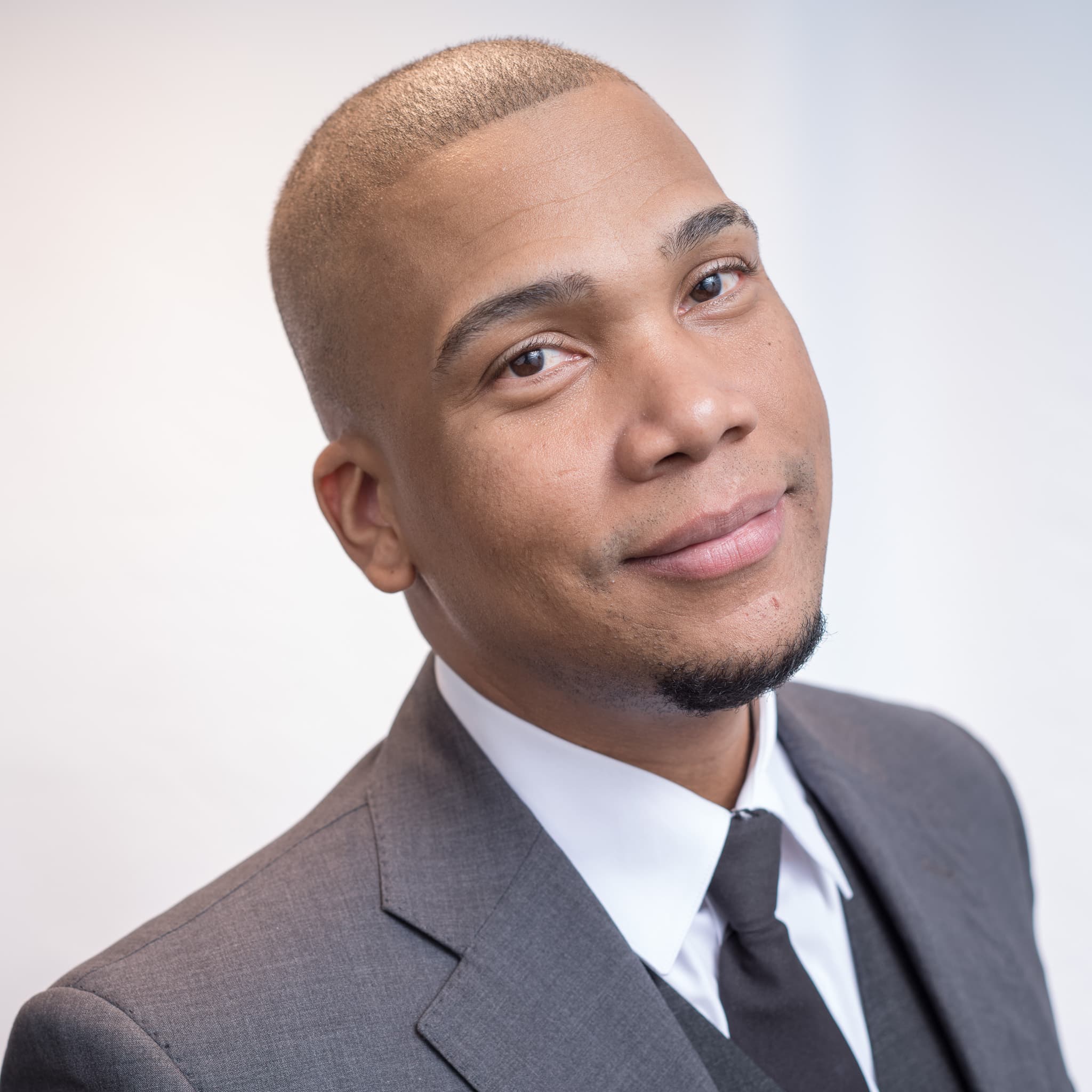
Put those together and a smart two-outfit plan looks like this: a navy top with an open collar, plus a structured mid-gray blazer you can add over a lighter shirt. That is three usable frames from two garments and one layer, which is all most people need.
What each outfit should be
Whatever number you land on, every piece you bring should clear the same bar. A good headshot outfit is:
- Solid or very subtly textured. Tight patterns (thin stripes, small checks, herringbone) can shimmer or buzz on camera (an effect called moiré). Solids are safest, and a subtle texture like a fine knit is fine.
- Well-fitted. Fit is the difference between "professional" and "borrowed my dad's blazer." Clothes that pull, gap, or bunch at the shoulder show up immediately in a tight crop. If your best jacket needs a quick press or a shoulder taken in, that is time well spent.
- The right color for your skin and use. Deep, saturated colors tend to read as confident and photograph cleanly. Very bright white can blow out under studio light; pure black can flatten. Soft blues, grays, and jewel tones are reliable across skin tones. Our full breakdown lives in the best colors to wear posts, but when in doubt, mid-tone and saturated beats neon or stark.
- Free of loud logos and busy graphics. A visible logo dates the photo and pulls the eye off your face. Keep it clean.
If you want the deeper wardrobe science (necklines, women's versus men's considerations, industry tone), our executive portraits and LinkedIn headshots pages break down what each audience expects, and our executive portrait photographer sessions include wardrobe direction on the day.
Industry matters more than quantity
The number of outfits is less important than whether they match the room you are trying to walk into. A few quick calibrations:
Finance, law, and consulting. Formal reads as competent here. One tailored look (a well-fitted jacket, a clean solid shirt or blouse, minimal jewelry) is worth more than three casual ones. Bring the sharpest thing you own and one conservative backup.
Tech and startups. The tone is softer. A quarter-zip, a crew-neck under a blazer, or a clean button-down without a tie all read correctly. Here a second, more relaxed look genuinely helps, because your audience expects approachable over formal.
Creative, real estate, and personal brand. Range is an asset. This is the one context where bringing three or four looks, including something with a bit of personality, pays off, because the images are working across a website, social, and marketing, not just a single profile square.
Healthcare and medicine. Clean and trustworthy wins. A crisp solid top, often under a white coat if the role calls for it, in a calm color. One primary look plus the coat variation usually covers it.
You do not need a different wardrobe philosophy for every session: you need to know which room the photo is for, and pack toward that.
What to actually bring on the day
Beyond the outfits themselves, a few small things save the session:
- A lint roller and a travel steamer or wrinkle-release spray. Studio light finds every crease. This is the highest-return item in your bag.
- The looks on hangers, not folded. Folded shirts arrive with fold lines that photograph as harsh horizontal creases.
- Undershirts and clean basics. For layered looks, a smooth base matters.
- Nothing you have not tried on recently. The morning of the shoot is not the time to discover a button gaps or a collar sits wrong.
At Fuentes Studio, sessions run out of our Riverdale studio in The Bronx (with outdoor options at Van Cortlandt Park), edited images are delivered within 48 hours, and every session includes real-time direction, so if a look is not working on camera, you will know while there is still time to switch. That guidance is exactly why you do not need to over-pack: an experienced eye on the day is worth more than three extra shirts.
Frequently asked questions
Is one outfit ever enough? Yes. For a standard LinkedIn or corporate headshot, one strong, well-fitted look genuinely covers it. We suggest a second only as insurance in case the first reads flat under the light. If you own one great look and nothing close behind it, bring the one great look.
Can I change looks during a single-headshot session? For a one-image LinkedIn session, the time is built around getting one look right, so plan for a primary outfit. Adding a quick layer (a blazer over the same shirt) is easy and free; a full change is better suited to the on-location photoshoot tier, which is built for multiple looks.
Should men and women pack differently? The principles are identical: solids, good fit, the right color, one smart layer. The main difference is that women often have more effective range from a single change (a jacket on or off, a neckline swap) and can get several distinct frames from fewer garments.
What if I have no idea what works for me? That is what the session direction is for. Bring two options you feel decent in, and we will steer color, layer, and expression on the day. You do not need to solve wardrobe alone before you arrive.
How far in advance should I plan my outfits? Try everything on two or three days before, not the night before. That leaves time to steam, press, or swap if something does not fit the way you remembered. Wardrobe stress the morning of a shoot shows up in your expression.
The bottom line
For most professionals in NYC, the right answer is two outfits in two different colors, plus one layer you can add or remove, not a suitcase. Bring more only when the session is built for range, like an on-location photoshoot or a personal-brand shoot. Pack solids that fit, steam them, and let the direction on the day do the rest.
Book Your Session when you are ready, and we will handle the harder part, getting the expression right, once you are in front of the camera.
Looking to update your professional image? executive portrait photographer NYC: sessions in Riverdale, NYC, booked as late as two days before.
Explore NYC Headshot Services
Sessions from $95, booked as little as two days ahead. Retouched delivery in 48 hours.
Related Reading
Ready to Create Something Beautiful?
Whether it's a portrait session, a brand shoot, or a commercial project. Let's bring your vision to life.