Physician & Healthcare Headshots in NYC (2026): What Builds Patient Trust
For most professionals, a headshot is a formality. For a physician, it is closer to a first appointment. A patient scrolling a hospital's provider directory, a Zocdoc listing, or a private practice's "Meet the Team" page is making a quiet, fast decision before they ever pick up the phone: do I trust this person with my health? They make it in about a second, and they make it largely on the face in the photo.
That is a lot of weight for one image to carry, and most clinical headshots do not carry it well. They are either a decade-old hospital badge crop, a phone photo against an exam-room wall, or an over-retouched portrait that looks nothing like the person who walks into the room. If you run a practice, chair a department, or handle marketing for a medical group in New York, this guide is about what actually makes a healthcare headshot work, for the patient looking at it, and for the clinician who has to live with it.
Ready to book? Book Your Session: physician and care-team headshots at our Riverdale studio, or on-location at your NYC practice.
What a patient is actually reading in a doctor's photo
Patients are not art critics. They cannot tell you why one physician headshot feels reassuring and another feels off, but they respond to it anyway. Years of photographing clinicians has made the pattern clear. Three things do almost all the work.
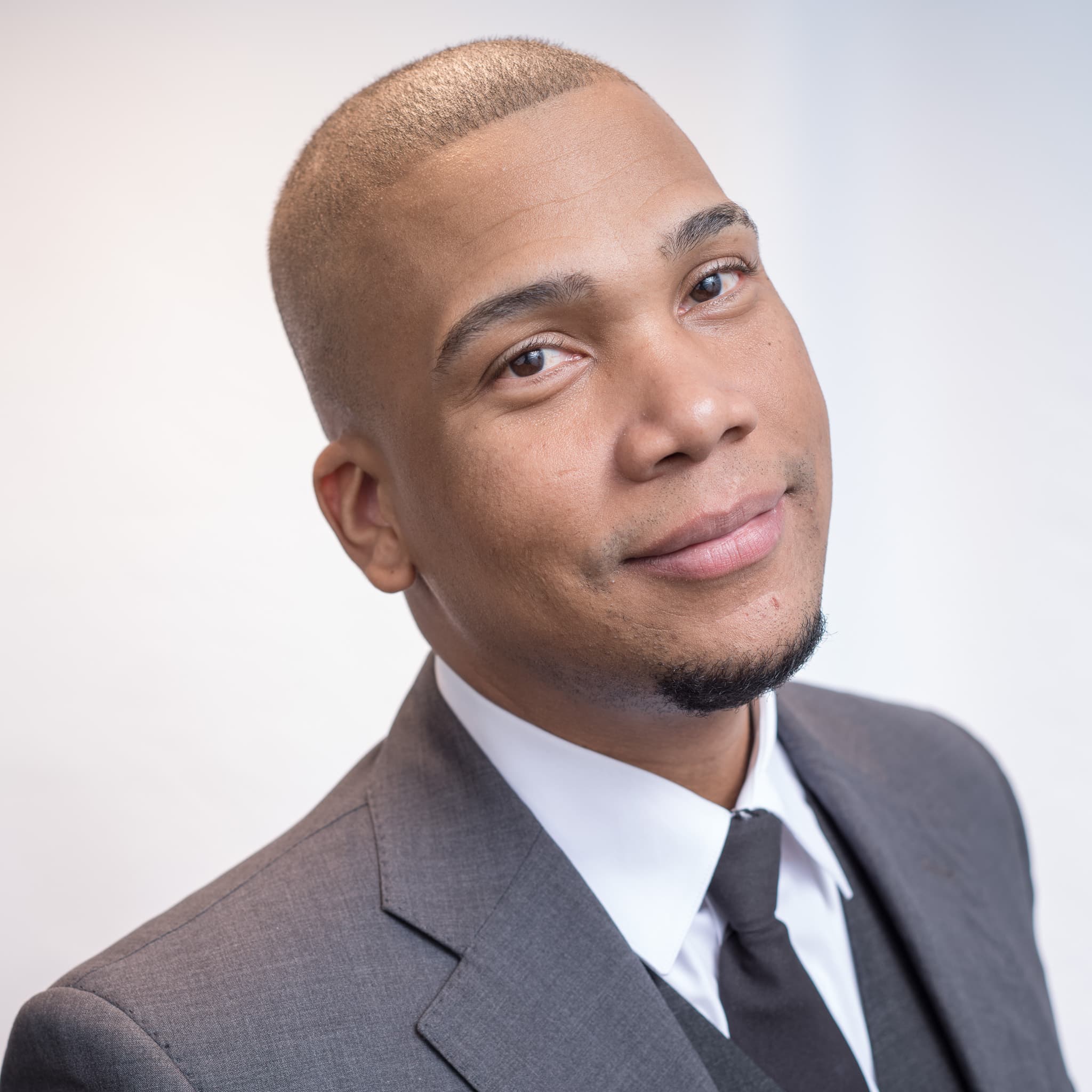
The eyes. More than in any other profession, a healthcare headshot lives or dies on genuine, direct eye contact. Patients are unconsciously scanning for attentiveness: the sense that this person will actually listen. A slightly soft, engaged expression with the eyes meeting the lens reads as present. A stiff, chin-up "corporate power" pose reads as rushed, which is the last thing an anxious patient wants to feel about their doctor.
Warmth without salesmanship. The goal is approachable competence, not a toothpaste ad. An easy, closed-mouth or lightly smiling expression signals steadiness. An over-broad grin can undercut the gravity patients want from someone making a diagnosis. The sweet spot is the expression a good clinician actually wears when they say "tell me what's been going on" (warm, unhurried, and calm).
Signals of care, not just credentials. Clean framing, honest color, and a background that says "clinical setting" without shouting it. Patients are reassured by images that look current and professional, because a practice that invests in getting the small things right reads as a practice that will get the big things right too.
Everything below is in service of those three things.
The white coat question: wear it, or don't?
This is the first question every physician asks, and the honest answer is it depends on who is looking.
Wear the coat when the audience is patients and the setting is a hospital, primary care, surgical, or specialist practice where the coat is part of the daily uniform. For a large share of patients, particularly older patients and those in serious or acute specialties, the white coat is still a powerful trust cue. It says clinician instantly, before a single word of the bio is read. If your directory photos need to reassure a nervous patient in under a second, the coat earns its place.
Skip the coat for pediatrics, psychiatry, therapy, dermatology, wellness, concierge, and much of outpatient and integrative medicine, where the relationship is built on approachability rather than clinical authority. A child or a therapy patient can find the coat intimidating; a warmer, business-casual look often serves those practices better. Many concierge and boutique NYC practices deliberately drop the coat to signal a more personal, less institutional experience.
The strongest practices we photograph often shoot both: one frame with the coat for the hospital directory and insurance networks, one without for the practice website and social. It costs a few extra minutes per person and gives the marketing team options for different channels. If you are booking a team, decide the coat policy before the shoot day so the set stays consistent; a directory grid where half the physicians wear coats and half do not looks accidental.
Wardrobe and grooming: the details that photograph
Under the coat, or in place of it, the same rules that make any corporate headshots work apply, with a few clinical specifics.
- Solid, mid-tone colors under the coat. A crisp collared shirt or blouse in navy, soft blue, burgundy, or deep green reads cleanly against a white coat. Avoid bright white shirts directly under a white coat: the two whites fight and the exposure gets tricky.
- Skip loud patterns and tight stripes. Fine patterns shimmer and distort on camera. For a set of clinicians that needs to look cohesive, solids are the safe, professional default. Our note on the best colors to wear for a headshot goes deeper on what flatters on camera.
- Mind the accessories. A stethoscope worn naturally around the neck can reinforce the clinical read for some specialties, but it should look lived-in, not staged like a prop. Lanyards, visible ID badges, and pens in the coat pocket usually clutter the frame: clear them.
- Grooming reads on camera. Hair off the face, glare-free glasses (bring them; we can angle to kill reflections), and matte skin. Clinicians coming straight off a shift photograph better with two minutes at a mirror than they expect.
The principle is the same one that governs what not to wear for a headshot: nothing in the frame should compete with the face.
Getting a whole care team to match
Individual physician headshots are a photography problem. A twenty-provider medical group is a logistics problem, and the payoff for solving it is a provider directory that looks like one practice instead of twenty separate careers stitched together.
When a patient browses a "Find a Doctor" page and every headshot has a different background, crop, and color temperature, the practice reads as disorganized before they have read a single credential. A matched set does the opposite: it signals a coordinated, well-run group. Getting there takes three disciplines held across the whole shoot.
- One lighting setup, held all day. The same key light, distance, and background separation from the first physician to the last. Matching is maintained during the shoot, not manufactured later in editing.
- The same background and crop for everyone. Same physical backdrop, same exposure, same mid-chest-up framing with eyes on a consistent line. That is what makes the directory grid read as a single system.
- A consistent coat policy and retouch level. Decide coat-or-no-coat up front, and hold the retouching to the same honest standard for every provider so no one frame looks airbrushed next to the others.
Practices that hire in waves have the hardest time with this, because new physicians get photographed months apart by whoever is available. The fix is the same one that keeps any team headshots grid consistent: shoot the group in one dedicated day to reset everyone to a single look, then book new joiners back into that exact setup as they onboard.
On-location at your practice, or in-studio?
Both work for healthcare groups; the right choice comes down to headcount and how hard it is to pull clinicians off the floor.
On-location means we bring the full studio (backdrop, lights, and all), to your NYC office or hospital. For a busy practice this is usually the winner: physicians step out of clinic for ten minutes, get photographed in a cleared conference room or a quiet office corner, and step back in. No one loses half a day traveling. All we need is roughly ten by twelve feet of clear floor, a wall we can light cleanly, and a power outlet.
In-studio at our Riverdale space in The Bronx suits smaller groups, solo practitioners, and clinicians who want a fully controlled environment with zero variables. It also removes any burden of prepping a room on your end.
For teams above roughly fifteen providers in one building, on-location almost always saves more in clinical hours than it costs. For a solo physician or a handful of partners, the studio is simplest.
What it costs, and how to budget it
Healthcare practices need a number they can take to a budget meeting, not a mystery quote. The pricing is straightforward. A single physician booking an individual professional headshot for a directory and LinkedIn books the $149 Outdoor Headshot; executive-level portrait sessions are quoted on request. For a group, team sessions are a flat $99 per person (5-person minimum), so budgeting a provider directory is one line of math: headcount times ninety-nine, with no separate setup fee and no upcharge for on-location travel within NYC.
That flat per-person structure is deliberate. It lets a practice manager get sign-off from finance with an exact figure before booking, and it forecasts the cost of the next hiring wave without a fresh negotiation. When you compare vendors, watch for the opposite pattern: a low day rate that quietly bills lighting, retouching, and file delivery as add-ons. The all-in per-person number is the only figure that compares fairly.
Delivery, HIPAA, and the practical details
For a clinical set, what happens after the shoot matters as much as the shoot itself. Confirm three things before you book.
- Turnaround. We deliver finished, retouched galleries within 48 hours, so a new provider's directory profile does not sit empty for weeks after they start.
- File formats. Ask for both a web-optimized crop for the practice site, Zocdoc, and hospital directories, and a full-resolution version for print, press, and conference materials. A good delivery includes both without chasing.
- Selection and approval. For a public-facing provider grid, a single approver keeps the final set uniform. Decide in advance whether each physician picks their own frame or marketing approves a consistent look.
One note practice managers appreciate: a headshot session photographs the provider against a neutral backdrop, not patients or clinical spaces, so there is no PHI in the frame and nothing that touches HIPAA. We shoot people, cleanly, and the images are yours.
Frequently asked questions
Should physicians wear a white coat in their headshot? It depends on the audience. For hospital directories, primary care, surgical, and specialist practices where patients expect clinical authority, the coat is a strong trust cue: wear it. For pediatrics, psychiatry, therapy, dermatology, wellness, and concierge practices built on approachability, a warmer business-casual look often serves better. Many practices shoot both and use each for different channels.
How do you get a whole medical group's headshots to match? One lighting setup held for the entire day, the same background and crop for every provider, and a consistent coat and retouch policy decided before the shoot. Matching is a discipline maintained during the session, not fixed afterward, which is why one dedicated team day beats headshots taken piecemeal over months.
Can you come to our hospital or practice? Yes. On-location sessions bring the full studio to your NYC office or hospital; providers step out of clinic for about ten minutes each. We need roughly a ten-by-twelve-foot cleared room, a wall to light, and power. For groups over fifteen it usually saves more in clinical hours than traveling to a studio.
How much do healthcare headshots cost? Individual physician sessions are the $149 Outdoor Headshot, with executive portraits quoted on request; group provider sessions are a flat $99 per person (5-person minimum) with no setup fee or NYC travel upcharge, so a directory budgets as headcount times ninety-nine.
How fast do we get the photos, and is it HIPAA-safe? Finished, retouched galleries are delivered within 48 hours. Sessions photograph providers against a neutral backdrop (no patients, no clinical records, no PHI in frame) so nothing about a headshot shoot touches HIPAA.
Book your practice's headshot session
Fuentes Studio has photographed hundreds of professionals across NYC, including clinicians and care teams, with a 5.0 Google rating and 48-hour delivery on every session. Whether a single physician needs a directory portrait that finally looks like them, or a twenty-provider group needs one matched set for the "Find a Doctor" page, you get honest color, genuine warmth, and photos that earn a patient's trust before the first appointment.
Book Your Session and tell us your provider count: we will build the day around your clinic schedule.
Looking to update your professional image? headshot photographer NYC: sessions in Riverdale, NYC, booked as late as two days before.
Explore NYC Headshot Services
Sessions from $95, booked as little as two days ahead. Retouched delivery in 48 hours.
Related Reading

Ready to Create Something Beautiful?
Whether it's a portrait session, a brand shoot, or a commercial project. Let's bring your vision to life.