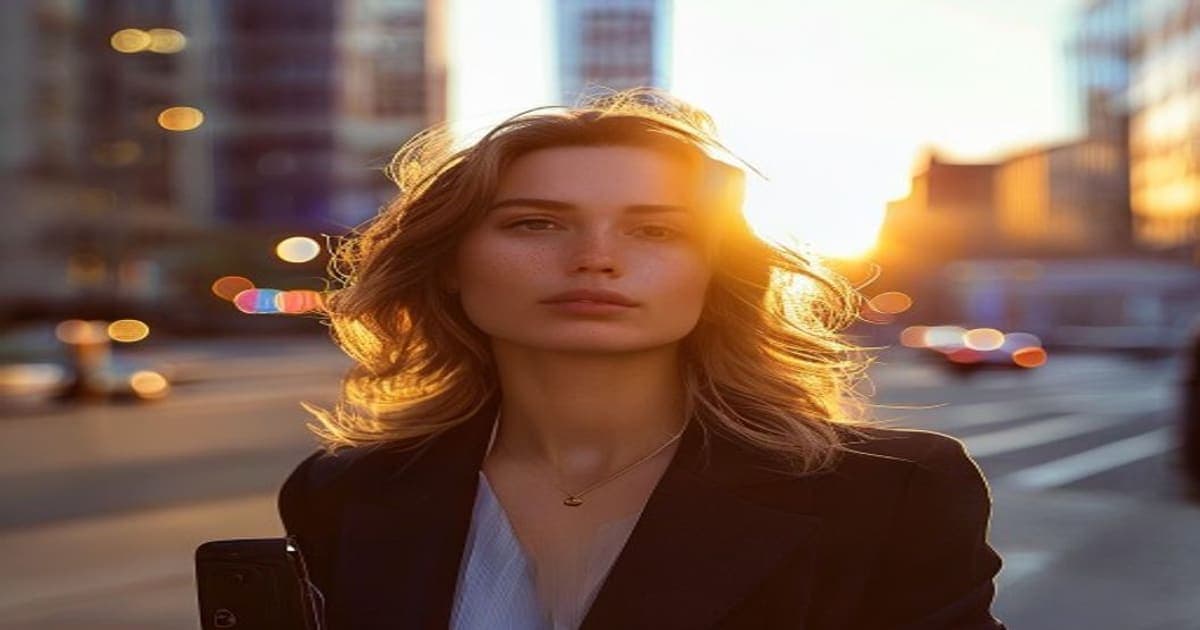
Phone Selfie, AI Headshot, or Pro Photographer? The NYC LinkedIn Decision (2026)
# Phone Selfie, AI Headshot, or Pro Photographer? The NYC LinkedIn Decision (2026)
In 2026 there are three realistic ways to get the photo at the top of your LinkedIn profile. You can hold up your phone and shoot it yourself. You can upload a handful of pictures to an AI headshot generator and let software invent a polished version of you. Or you can sit for a professional photographer and walk away with a frame that was actually made of you, in a room, by a person.
Each of these is a real choice with real trade-offs, and the loudest advice online tends to come from whoever is selling one of them. I am a working photographer — I shoot headshots out of a studio in Riverdale, in the northwest Bronx — so I have an obvious stake in the third option. I am going to be honest about all three anyway, because the truth is that the right answer depends on who is going to look at the photo and what you need it to do. A graduate updating a student profile and a managing director refreshing their bio do not have the same decision.
This guide walks the choice the way I walk it with people who call the studio unsure whether they even need me. We will compare the three options across the four things that actually matter — cost, time, control, and risk — and then I will give you a short decision framework so you can land on the right one for your situation.
**Ready to skip the comparison and book a real session?** [Book your headshot session](/book) and you can be photographed as soon as next week — bookings open seven days out.
The three options, honestly
Before the comparison, here is what each path actually is in 2026 — not the marketing version.
The phone selfie
Modern phones take genuinely good photos. Portrait mode blurs the background, computational processing handles tricky light, and a 2026 flagship in good window light can produce something far better than the webcam shots that dominated LinkedIn five years ago. The selfie is free, instant, and entirely under your control. Its weaknesses are the ones you cannot fix from inside your own arm's reach: the focal length of a phone held close distorts faces, self-portraits rarely catch a natural expression, and most people have no way to light themselves well or judge their own angles. A selfie can be fine. It is almost never the thing that makes a stranger stop scrolling and think *this person is the real deal.*
The AI headshot generator
AI headshot tools have improved fast. You upload somewhere between ten and thirty photos of yourself, the service trains a quick model on your face, and it returns dozens of stylized "headshots" in suits and studios you were never in. It is cheap, it is fast, and the best outputs look impressively plausible at thumbnail size. The catch is that the result is a synthetic average of your uploaded photos, not a record of you. Look closely and you find the tells — slightly wrong ears, melted glasses arms, teeth that belong to no one, a collar that does not close, skin that has the airbrushed sheen of a stock image. And there is a second cost that does not show up on the price page: a growing number of recruiters, journalists, and clients can now spot an AI headshot, and reading one on a professional profile lands as a small credibility problem rather than a polish upgrade.
The professional photographer
A professional session is the most expensive and the slowest of the three — you book a time, you show up, you sit for someone. What you get in return is a real photograph of the real you, lit deliberately, shot at a flattering focal length, directed toward an expression that reads as confident rather than stiff, and retouched honestly so it still looks like you when a hiring manager meets you in person. With a working pro you also get judgment in the room — wardrobe calls, angle corrections, the small adjustments that turn a good frame into the one. At my studio that comes back edited within 48 hours, which closes most of the speed gap people assume exists.
Cost, time, control, risk: the comparison
Here is the head-to-head across the four axes that decide this for most people.
1. **Cost.** The phone selfie is free. AI generators are inexpensive — a small one-time fee for a batch of images. A professional session is the largest outlay of the three, though NYC sessions span a wide range and are a once-a-year-or-less purchase, not a subscription. If raw price were the only axis, this would be a short article. 2. **Time.** The selfie is instant. AI takes anywhere from a few minutes to a few hours to generate. A professional session is the slowest to *start* — you book ahead — but the working time is short and, with 48-hour delivery, the finished images are in your hands faster than people expect. 3. **Control.** This is where it flips. With a selfie you control everything except quality. With AI you control almost nothing — you feed it inputs and accept what it returns, tells and all. With a photographer you direct the outcome collaboratively: you can ask for a warmer expression, a different crop, a tie or no tie, and see it change in real time. 4. **Risk.** The selfie risks looking amateur. AI risks looking *fake* — and being caught, which is worse than looking amateur, because it reads as a judgment problem rather than a budget one. A professional session carries the least risk to your reputation: the photo is unambiguously real, unambiguously you, and ages well because nothing about it is invented.
The pattern underneath the table is simple. As you move from selfie to AI to photographer, you trade money and lead time for control and credibility. The right choice is whichever side of that trade your specific profile needs more.
So which one is actually right for you?
Use this framework. It is the same one I give people on the phone.
**Choose the phone selfie if** the photo is genuinely low-stakes — a personal account, a side profile, a placeholder while you sort out something better — *and* you have good natural window light and someone who can press the shutter for you so it is not a literal arm's-length selfie. The moment the photo is attached to a job search, a client-facing role, a bio, or anything where a stranger is deciding whether to trust you, the selfie has aged out of the decision.
**Choose an AI generator if** you need *something* in the next ten minutes, you have no budget at all, and the audience will only ever see it at thumbnail size with low scrutiny. Be clear-eyed about the trade: you are accepting a real chance of being read as fake by exactly the people — recruiters, partners, press — whose opinion the photo exists to influence. For a throwaway internal directory, fine. For the face of your professional brand, it is a gamble against the readers who matter most.
**Choose a professional photographer if** the photo has to do real work — win interviews, reassure clients, anchor a personal brand, match the seniority you actually carry. This is the entire reason a dedicated [LinkedIn headshot photographer](/linkedin-headshots) exists: not to make you look like someone else, but to make the real you read at your best to the specific people you are trying to reach. If the photo is load-bearing, the cheapest option is the one that does the job, and that is almost always a real session.
A quick gut check: imagine the most important person who will see this photo this year — the hiring manager, the prospective client, the investor. Picture them looking closely. If a selfie or an AI image would survive that look, take it and move on. If it would not, you already know which option you need.
Why "real" wins on LinkedIn specifically
LinkedIn is not Instagram. Nobody is judging your headshot as art; they are using it as evidence. A profile photo on LinkedIn answers one unspoken question for the viewer: *can I take this person seriously?* That makes authenticity the whole game. An AI image can be technically smooth and still fail that question the instant a viewer senses something is off, because "off" reads as "hiding something." A selfie can be warm and human and still fail it because it reads as "did not bother." A real, professional frame passes because it is exactly what it appears to be — a competent person who cared enough to show up.
There is a longevity argument too. You will meet the people who saw your profile. The recruiter who scheduled the call, the client who signed the contract, the panel at the conference — they form an expectation from your photo and then check it against the person who walks in. A real headshot survives that meeting. An invented one creates a small gap between the image and the human, and that gap is precisely the thing trust is made of. This is also why I keep retouching honest: I will clean up a stray hair or an off day in your skin, but I will not rebuild your face, because the photo has to still be true when you are standing in the room.
If you have read this far, you are almost certainly in the "needs a real one" group — people sorting out a throwaway photo do not research the decision this hard. When you are ready, [book a session](/book) and we will make a frame that holds up everywhere you use it. I work with a lot of [tech professionals and founders](/headshots-for-tech) in exactly this spot, refreshing a profile that finally has to match where their career actually is.
Frequently asked questions
**Are AI headshots good enough for LinkedIn in 2026?** For a low-scrutiny placeholder, sometimes. For the public face of your professional brand, I would not risk it. The technology is impressive but still leaves tells — hands, glasses, teeth, ears, collars — and a growing share of recruiters and clients can now recognize an AI headshot, which reads as a credibility problem rather than a polish one. If the photo has to win trust, real wins.
**Can't I just use a good phone selfie?** You can, and for genuinely low-stakes profiles it is fine — especially in good window light with someone else pressing the shutter. The limits are real, though: a phone held at arm's length distorts your face, self-portraits rarely catch a natural expression, and most people cannot light or angle themselves well. Once the photo is attached to a job search or a client-facing role, a selfie usually undersells you.
**How fast can I get professional headshots in NYC?** Faster than most people assume. The session itself is short, and at my Riverdale studio finished, retouched images come back within 48 hours. Bookings open seven days out, so from booking to finished files is about ten days — often less time than people spend wrestling with an AI generator and second-guessing the output.
**What makes a professional headshot worth the cost over the free options?** Control and credibility. A photographer lights you deliberately, shoots at a flattering focal length, directs your expression in real time, and retouches honestly so the photo still looks like you in person. The result does the job a headshot exists to do — win interviews, reassure clients, anchor your brand — which the free options frequently do not. For a once-a-year purchase, it is the cheapest option that actually works.
**Where are you located, and who do you work with?** I am Emmanuel Fuentes, and I shoot out of a studio in Riverdale, in the northwest Bronx, with outdoor sessions available nearby at Van Cortlandt Park. I have photographed 800+ professionals — including Fortune 500 teams — across LinkedIn, corporate, and executive work, with a 5.0 Google rating. If you have been happy with a past session, [leaving a quick review](/leave-a-review) genuinely helps other professionals find the studio.
---
The decision is really one question wearing three outfits: how much does this photo need to be *true*? If the answer is "not much," a selfie or an AI image will do. If the answer is "completely" — because real people are going to act on it — then there is only one option that delivers, and it is the oldest one.
*Looking to update your professional image? [LinkedIn headshot photographer New York](/) — sessions in Riverdale, NYC, booked at least a week ahead.*
Explore NYC Headshot Services
Sessions from $65, booked at least a week ahead. Retouched delivery in 48 hours.
Related Reading
Ready to Create Something Beautiful?
Whether it's a portrait session, a brand shoot, or a commercial project — let's bring your vision to life.